Worth Every Penny: How Camden's Makers Learned to Stop Apologising for Their Prices
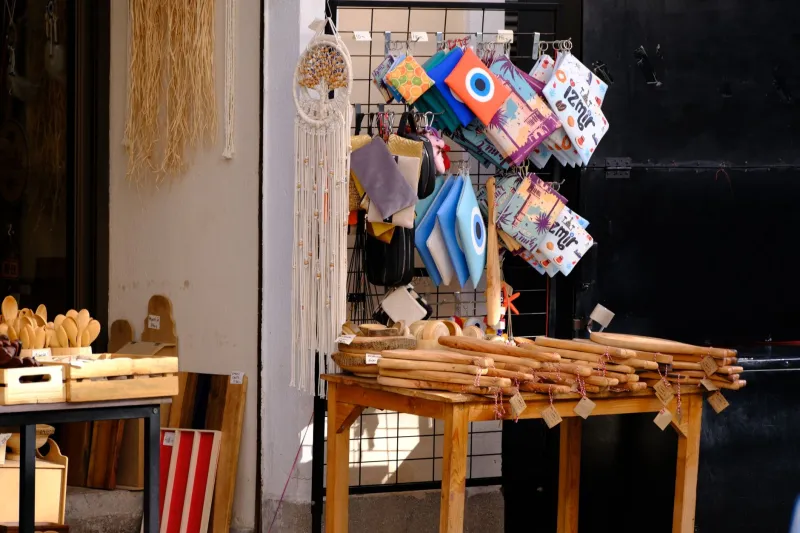
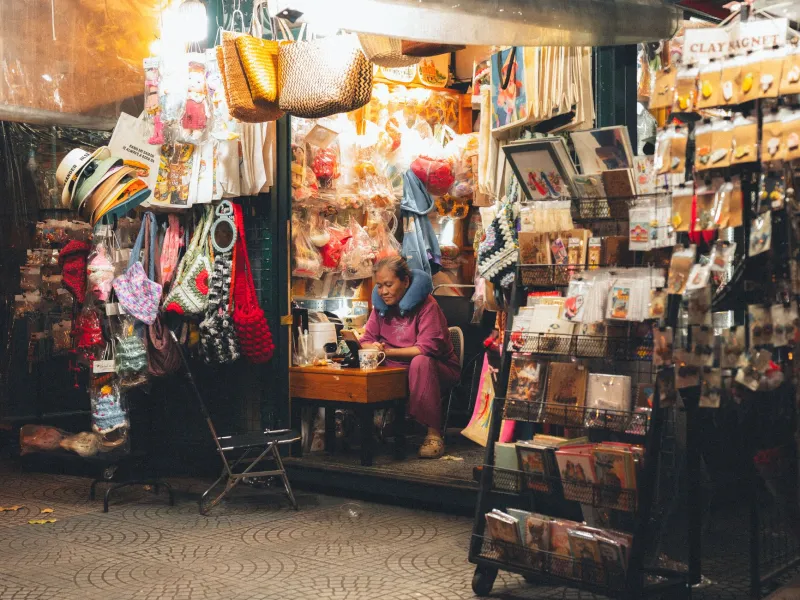
There's a particular kind of awkwardness that settles over a market stall the moment a customer picks something up, turns it over, clocks the price tag, and puts it back down without a word. Every maker knows it. That loaded silence, followed occasionally by the question that stings more than it should: "Couldn't you do it a bit cheaper?"
For a long time, a lot of Camden's independent artisans would fumble through an answer — knocking a fiver off here, throwing in a freebie there — quietly absorbing the loss because it felt easier than explaining. Easier, and somehow less uncomfortable, than asserting that their work was worth exactly what they were asking.
That's starting to change.
The Maths Nobody Talks About
Ask any maker to walk you through their pricing and you'll usually get a pause first. Not because they haven't thought about it — most have thought about little else — but because laying it out plainly feels almost confrontational in a culture that still romanticises craft as a labour of love rather than a legitimate livelihood.
Sophie, a textile artist who has sold her hand-dyed scarves and wall hangings through Camden Market for the past four years, spent her first eighteen months charging what she describes as "guilt prices."
"I was factoring in materials and maybe a vague nod to my time, but I wasn't paying myself anything close to a fair hourly rate," she says. "I think I was scared that if I charged properly, people would laugh. Or worse, just walk away."
The turning point came when she sat down and did the numbers properly — really properly, including the hours spent sourcing fabric, the studio rent, the packaging, the market fees, the time spent on social media and admin that never shows up in the finished product. What she found was that she'd been effectively subsidising her customers' purchases out of her own pocket.
"Once I saw it written down, I couldn't unsee it. I wasn't running a business — I was running a very expensive hobby for other people's benefit."
Imposter Syndrome Has a Price Tag
What Sophie experienced has a name, even if it rarely gets applied to pricing: imposter syndrome. The quiet, persistent voice that whispers you're not quite legitimate enough to charge what you're actually worth. For makers, it's particularly insidious, because it's often reinforced from the outside.
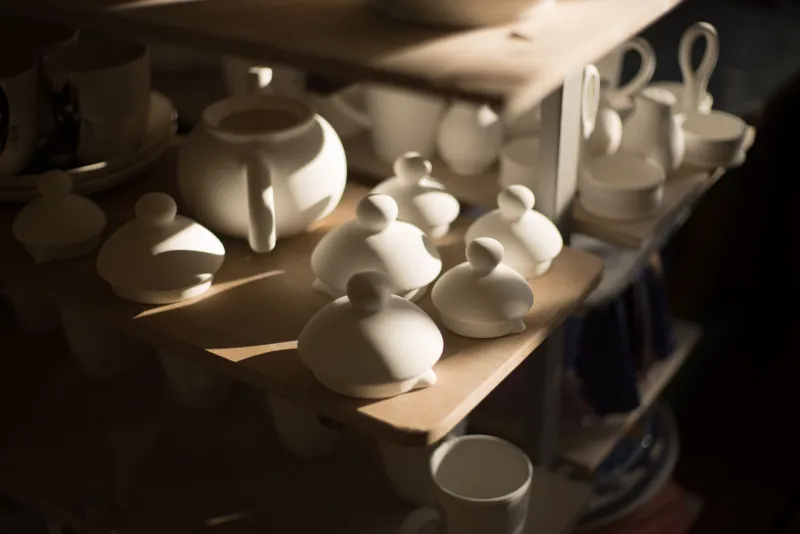
The comparison to mass-produced alternatives is almost impossible to avoid. A hand-thrown ceramic mug sitting beside a £4 version from a high-street chain faces an unfair fight in the mind of a casual browser. The craft, the time, the skill, the individuality — none of that is immediately visible in the way a price difference is.
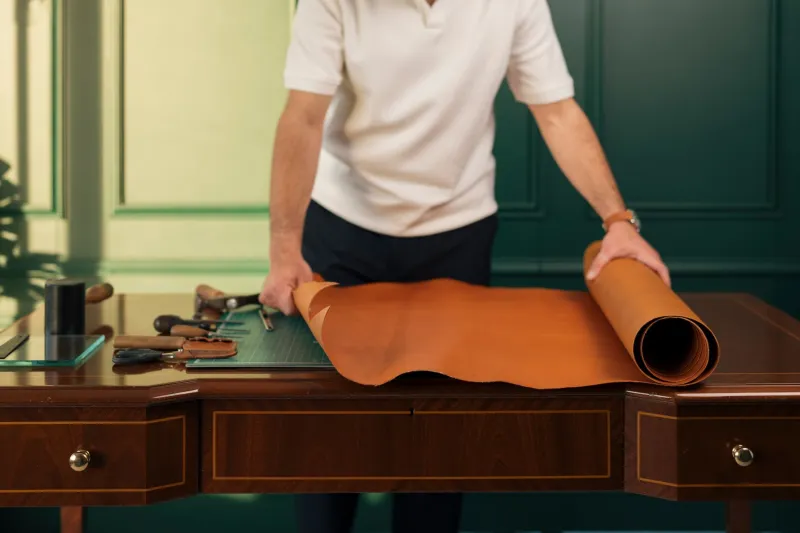
Jamil, a leatherworker based in a studio just off Chalk Farm Road, has spent years trying to reframe that conversation. "People sometimes say to me, 'I can get a wallet for a tenner online.' And I say, 'Yes, you absolutely can.' But then I explain — this leather was sourced from a tannery I've visited. I cut each piece by hand. I stitch it myself. This wallet will last you fifteen years. The tenner one won't last fifteen months."
He doesn't say it defensively. That's the shift. He says it like someone who has made peace with the value of what he does — because he has.
Transparency as a Sales Tool
One of the more surprising discoveries several Camden makers have made is that being openly honest about costs doesn't alienate customers. It builds trust.
A number of artisans have started breaking down their pricing — not in exhaustive detail, but enough to give buyers a real sense of what goes into a piece. Some do it verbally at the point of sale. Others include a small card with their products, or post about it on social media. The response, almost universally, has been positive.
"I did a post last year where I broke down the cost of one of my candles," says Priya, who makes hand-poured soy candles using botanicals she sources from a small supplier in the UK. "Materials, my time, packaging, a portion of my studio costs. I was nervous about it — I thought people might think I was being defensive or making excuses. Instead, it got more engagement than almost anything else I'd posted. People were genuinely interested. Some of them said it made them feel better about spending the money."
That reaction makes a kind of sense. In an era of greenwashing and vague claims about artisanal production, actual transparency is genuinely rare. When a maker shows their working — when they say, plainly, here is what this costs and here is why — it signals confidence, integrity, and respect for the customer's intelligence.
The Customer Who Gets It
There's also a growing recognition among Camden's makers that their ideal customer isn't the one haggling for a discount. It's the one who asks questions. Who wants to know about the process. Who comes back.
Sophie put it simply: "The customers who push back on price are rarely the ones who become regulars. The customers who say 'tell me more about how you made this' — those are the ones who come back every season, who recommend me to their friends, who message me when they want something specific."
This isn't about being precious or exclusionary. It's about recognising that a maker's time and skill have genuine worth, and that communicating that worth clearly is part of the job. Not everyone will be in a position to buy — and that's fine. But the conversation doesn't have to be apologetic.
Jamil sums it up in a way that feels quietly revolutionary for anyone who's ever nervously hovered over a price label: "I'm not selling a wallet. I'm selling something someone made with their hands, that will outlast most things they own, that has a real story behind it. That's worth something. I just had to believe it first."
Learning to Hold the Line
None of this is easy, and most makers will tell you it's still a work in progress. The instinct to capitulate — to shave a bit off, to throw something in, to avoid the discomfort of standing firm — doesn't vanish overnight.
But there's a growing sense among Camden's maker community that undercharging isn't just a personal problem. It distorts the market. It makes it harder for every other independent artisan to hold their prices. It reinforces the cultural assumption that handmade should, somehow, be cheaper than it is — which is almost always the opposite of the truth.
Priya says she now thinks of her pricing as a kind of advocacy. "Every time I charge what my work is worth and explain why, I'm making it a little bit easier for the next maker to do the same. We're all in this together, whether we realise it or not."
That's the kind of solidarity you don't find in a spreadsheet. But it starts with one — and with the courage to look at the numbers honestly, and then ask for what you deserve.