Flattery or Theft? What Big Brands Are Really After When They Come Sniffing Around Camden

The Suits Have Noticed
Somewhere in a glass-walled meeting room in Shoreditch or Soho, a brand strategist is presenting a slide deck. On it: photographs of Camden Market stalls, screenshots of small-batch ceramicists' Instagram accounts, maybe even a quote lifted from a maker's website about why they care more about process than profit. The deck is titled something like Authenticity at Scale or Lessons from the Maker Economy.
This is happening. Not occasionally — regularly.
Over the past few years, established fashion houses, homeware giants, and consumer goods companies have quietly started treating places like Camden as living laboratories. Innovation consultants make the rounds. Trend scouts take notes. And a handful of independent makers have found themselves approached — sometimes directly, sometimes through intermediaries — by organisations many times their size, ostensibly keen to understand how they do what they do.
The question worth asking is: what exactly do they think they're going to find?
What They Say They Want
Ask the corporate side and you'll hear variations on the same themes. Agility. Directness. The ability to pivot without seventeen sign-off stages. They want to understand how a one-person operation in a railway arch can build a fiercely loyal following without a marketing budget. They're fascinated by the intimacy of the maker-customer relationship — the idea that someone might buy a hand-thrown mug not just because it's beautiful, but because they met the person who made it, heard the story behind the clay, maybe even watched it being thrown.
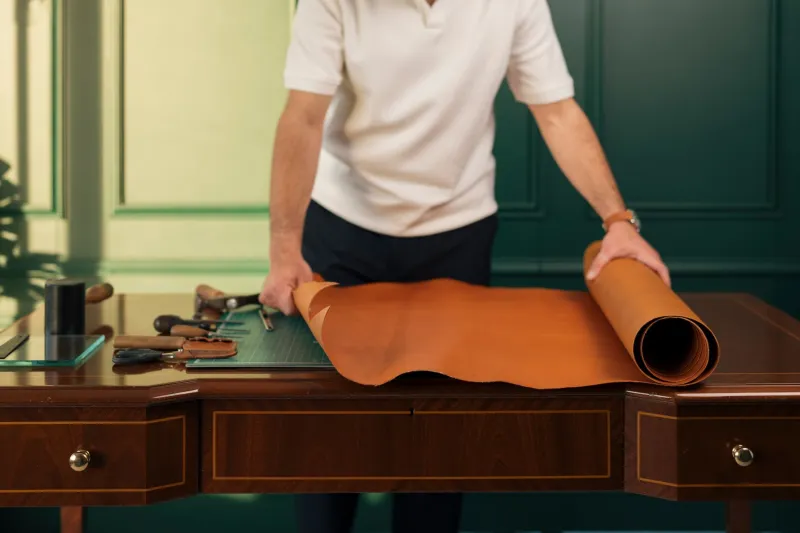
There's genuine curiosity there, to be fair. Big brands have spent decades building systems that prioritise consistency and volume, and those systems are increasingly ill-equipped to deliver the one thing modern consumers seem to want most: the feeling that something was made with actual care. When a Camden leather worker knows the name of every customer who's ever commissioned a wallet, that's not a quirk — from a brand strategy perspective, it looks like a superpower.
So they study it. They run workshops. They hire people whose job title includes the word 'artisan' without any apparent irony.
The Part They Keep Getting Wrong
Here's where it gets uncomfortable. The values that make Camden's maker community genuinely compelling aren't a methodology. They're not a framework you can bolt onto a supply chain that runs through five countries and prioritises a two-pound unit cost reduction over everything else.
Take transparency. When a maker here talks openly about where their materials come from, what they charge and why, or how long something actually takes to produce — that honesty isn't a brand positioning exercise. It comes from a direct relationship with the work and with the people buying it. It's often financially inconvenient. It occasionally costs sales. It's real precisely because it isn't strategic.
When a large corporation attempts to replicate this — a 'behind the scenes' content series, a 'meet the maker' campaign featuring workers in a factory they've never otherwise acknowledged — it tends to land with a hollow thud. Not always because the effort is cynical, but because the underlying conditions that produce genuine transparency simply don't exist at that scale. You can photograph the hands. You can't manufacture the relationship.
Several Camden makers who've been approached by or consulted for larger brands describe a recognisable pattern. Initial conversations are energising — there's flattery, genuine interest, real money on the table. Then the brief arrives and it becomes clear that what's actually wanted is the aesthetic of independence, not its substance. The look of craft without the constraints that make craft meaningful.
The Things Worth Borrowing
This isn't entirely a story of corporate bad faith, though. Some of what trickles from the maker world into mainstream retail is genuinely positive. The slow creep of repair services into high street chains, the growing number of brands offering some form of product lifespan guarantee, the shift — however patchy — toward more considered material sourcing: these changes have been nudged along, at least in part, by what independent makers have demonstrated is possible and desirable.
Customer engagement is another area where the influence is real. The directness Camden makers bring to how they talk about their work — no corporate gloss, no carefully lawyered product descriptions — has helped shift expectations about how brands communicate. Consumers have grown more attuned to the difference between language that's alive and language that's been processed by a committee. That's not nothing.
And occasionally, a larger organisation does manage to create something genuinely collaborative rather than extractive — commissioning work from independent makers, platforming craft communities, or structuring partnerships that direct meaningful income toward the people whose creativity they're drawing on. These examples exist. They're just not the majority.
What Camden Actually Offers
The creative energy in this part of London has always been a bit sui generis. It's the product of specific conditions: affordable (or historically affordable) workspace, a dense concentration of people who've chosen making over stability, a market culture that rewards directness and punishes pretension, and a community that has largely policed its own values through peer relationships rather than any formal structure.
What big brands are picking up on — the loyalty, the authenticity, the sense that buying from a Camden maker means something — is downstream of all of that. It's the output of a whole ecosystem, not a transferable technique.
Which is perhaps the most useful thing a corporate innovation team could take back to that glass-walled meeting room: the reason this works here is because of everything that can't be put in a slide deck. The financial precarity that keeps makers honest. The creative risk-taking that comes from having nothing to protect. The direct accountability of looking your customer in the eye across a market stall every Saturday.
You can study Camden all you like. But you can't copy it. And the makers here — the ones who've built something real — probably wouldn't want you to try.