Shelf Space, Real Talk: How Camden Makers Land Their First Wholesale Deal
There's a particular kind of nerves that comes with emailing a buyer for the first time. It's not quite like anything else — not the anxiety of setting up a market stall, not the vulnerability of posting your work online. It's the feeling of asking someone in a position of power to believe in what you've made enough to stake their shop's reputation on it.
For a lot of Camden's independent makers, wholesale feels like the next logical step. More consistent income. Broader reach. The quiet thrill of walking past a boutique and spotting your own work in the window. But the gap between knowing you want it and actually knowing how to get it? That's where most people get stuck.
We spoke to several Camden makers who've navigated that gap — some gracefully, some through a fair amount of trial and error — and asked them to share what they wish they'd known before they sent that first pitch.
Stop Waiting Until You Feel Ready
This one comes up almost every time. Makers who've successfully landed wholesale accounts tend to say the same thing: they pitched before they felt completely ready, and that turned out to be fine.
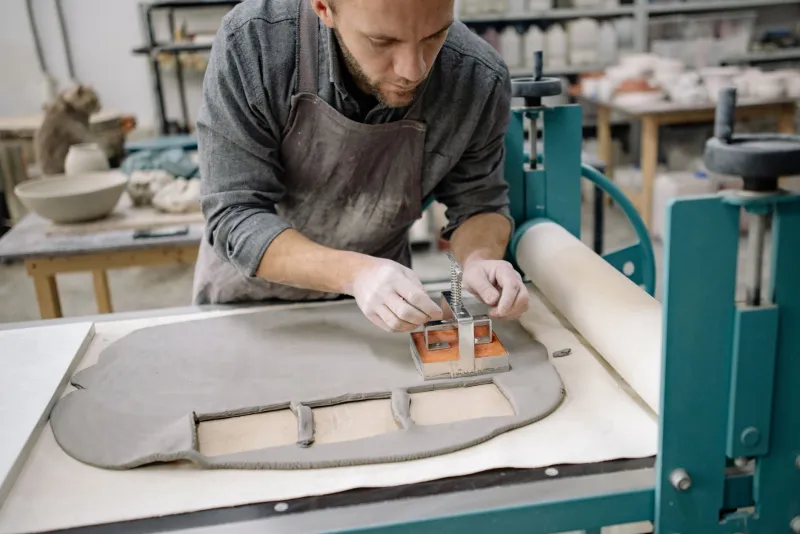
Jasmine, a ceramic artist based in Kentish Town who now stocks in four independent shops across North London, sent her first wholesale enquiry when she had about twenty pieces to her name. "I thought I needed a full catalogue, a proper line sheet, a website that looked like a real brand," she says. "But actually the buyer I ended up working with just wanted to know I could be consistent and communicate well. The fancy stuff came later."
That's not to say preparation doesn't matter — it does, enormously. But perfectionism has kept more than a few talented makers out of wholesale far longer than necessary.
Know Your Numbers Before You Know Anything Else
If there's one practical thing that separates makers who land wholesale deals from those who don't, it's this: understanding their pricing well enough to survive it.
Wholesale typically means selling at roughly half your retail price, sometimes less. If your margins aren't built to accommodate that, you'll either lose money or price yourself out of the market entirely. Neither is a good outcome.
Daniel, who makes hand-dyed textile goods and sells through a concept store in Shoreditch, spent three months reworking his pricing before he approached a single buyer. "I had to be really honest with myself about what things actually cost to make — materials, time, packaging, the lot. Then I worked backwards from what a shop would need to make their margin, and figured out whether my numbers could hold up."
They could, but only once he'd stopped undercharging. That process — uncomfortable as it was — meant that when he finally did pitch, he could talk about his pricing with confidence rather than apologising for it.
The Line Sheet Is Your Handshake
Buyers are busy. They're looking at dozens of potential suppliers, managing their own stock, running a shop. A clear, well-organised line sheet is the difference between getting a response and getting ignored.
A good line sheet doesn't need to be a design masterpiece. It needs to show your products clearly, list your wholesale and RRP prices, state your minimum order quantities, and make it obvious how someone gets in touch with you. That's essentially it.
Several makers we spoke to mentioned that they'd seen their response rates improve significantly once they simplified their approach. "I used to send these long emails explaining my whole creative process," admits Priya, a jeweller who now supplies three independent boutiques. "Then I started leading with the line sheet and a single paragraph about who I was. Suddenly people actually wrote back."
The creative context matters — but it belongs in a follow-up conversation, not a cold pitch.
Do Your Research. Genuinely.
This sounds obvious. It apparently isn't, based on how many buyers report receiving pitches from makers whose work has no business being in their shop.
Before you approach any stockist, spend real time understanding what they sell, who shops there, and what gap your work might fill. Visit in person if you can. Follow them on Instagram. Look at their price points. Ask yourself honestly: does my work fit here, or am I just hoping they'll say yes?
Personalised pitches — ones that reference specific things about the shop, that show you've actually paid attention — stand out immediately. "I always mention something specific about their curation," says Jasmine. "Not in a sycophantic way, just something genuine. It shows I've done the work."
Buyers are far more likely to take a meeting with someone who clearly understands their shop than with someone who's clearly done a bulk send.
Rejection Is Data, Not Verdict
Every maker we spoke to had been rejected. Most of them had been rejected multiple times before they got their first yes. The difference between those who pushed through and those who didn't wasn't talent — it was how they processed the no.
"The best rejection I ever got told me exactly why," says Daniel. "They said my minimum order was too high for their buying budget. So I adjusted it. Three months later I pitched again and they took me on."
Not every rejection comes with useful feedback, but when it does, treat it like gold. And when it doesn't, don't be afraid to politely ask. Most buyers won't mind a brief, professional follow-up asking what might make the fit better in future.
Build a Relationship, Not Just a Transaction
The makers who sustain wholesale accounts over the long term tend to approach buyers as collaborators rather than customers. That means keeping them updated on new work, being easy to communicate with, delivering on time, and occasionally checking in without an agenda.
"I send a little note every season — nothing salesy, just 'here's what I'm working on, thought you might like to see it,'" says Priya. "Two of my stockists have reordered just off the back of those messages without me even having to ask."
Wholesale is a relationship business. The pitch gets you in the door. The relationship keeps you there.
Start Local, Start Small
For Camden makers specifically, there's a genuine advantage in starting close to home. Independent shops in North London often actively want to support local makers — it's part of their identity, part of what makes them worth visiting over a chain.
That doesn't mean you should lead with "I'm local" as your main selling point, but it does mean the door is often more open than you think. Visit the shops you already love. Introduce yourself. Let the conversation happen naturally.
Wholesale doesn't have to start with a cold email to a concept store in Marylebone. Sometimes it starts with a chat at the counter of a shop you've been shopping in for years.
The first deal is the hardest. After that, you have a reference point, a case study, a story to tell the next buyer. And that changes everything.